
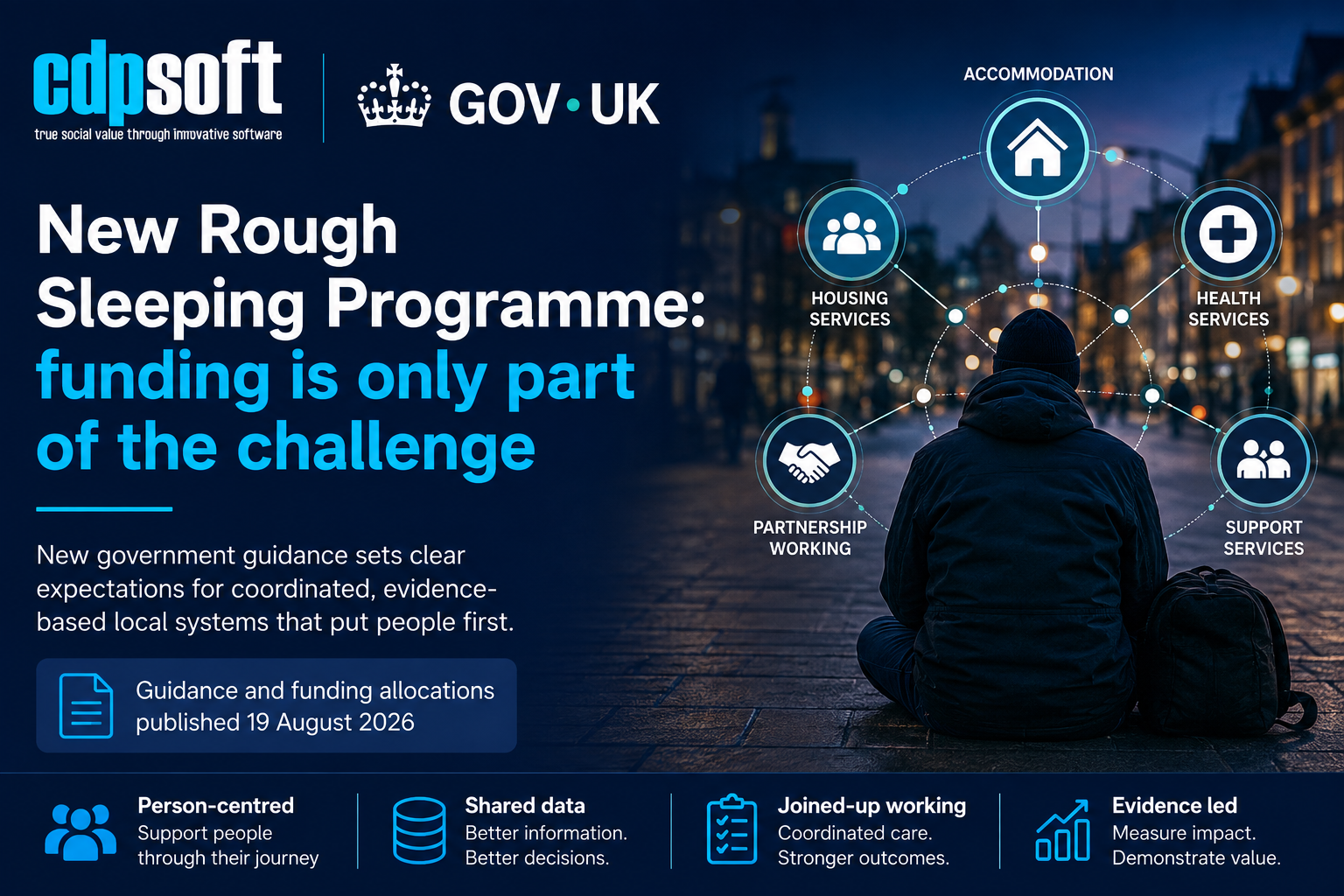
The Government has today, 19 August 2026, published its new Rough Sleeping Programme Guidance, alongside funding allocations for local authorities and Mayoral Strategic Authorities across England.
The programme represents a significant investment. £442 million will be provided over the next three years, including £255.5 million in revenue funding for routes off the street and wraparound support, £178 million in capital funding for settled accommodation, and £8.4 million additional funding for the Ending Homelessness in Communities Fund.
The immediate ambition is clear. Local areas are being asked to help as many people as possible move off the streets and into accommodation before Christmas 2026, while developing longer-term accommodation and support for people experiencing persistent and long-term rough sleeping.
But perhaps one of the most significant aspects of the new guidance is not simply the amount of funding available.
It is the emphasis on how local systems work together.
From individual services to coordinated pathways
The guidance recognises something those working in homelessness services understand well. Rough sleeping rarely exists in isolation.
People experiencing long-term rough sleeping can have contact with housing and homelessness services, health, adult social care, substance misuse services, criminal justice, safeguarding, voluntary organisations and accommodation providers.
The challenge is therefore not simply ensuring those individual services exist. It is enabling them to work together around the person.
The Government guidance is unusually explicit about what this should look like. It calls for integrated working involving:
- shared assessments
- coordinated case management
- joint planning
- clear accountability for outcomes
- shared access to data
- multidisciplinary working
- a single coordinated support plan.
The guidance goes further, stating that integrated working should replace a model based on a series of separate referrals.
That distinction matters.
A person experiencing homelessness should not have to repeatedly navigate organisational boundaries simply because the services supporting them operate different processes or systems.
Data has to support collaboration
The guidance specifically identifies shared access to data as an important part of effective local systems.
This is not simply a reporting requirement.
Used effectively, shared information can provide partners with a clearer understanding of an individual’s circumstances and support needs. At a strategic level, it can also help commissioners understand demand, identify gaps in provision and make better-informed decisions about service design.
For local areas now mobilising their Rough Sleeping Programme, there are some practical questions worth considering.
Can partners see where someone is within the local pathway?
Can assessments and referrals move effectively between organisations?
Can accommodation and support provision be understood across multiple providers?
Can teams see whether interventions are working?
And can commissioners turn operational information into evidence about outcomes, demand and future need?
These are infrastructure questions as much as they are service questions.
Liverpool provides an interesting example
The new guidance includes First Steps from the Street in Liverpool as a case study in preventing and reducing rough sleeping.
It describes a two-tier approach, with First Steps from the Street supporting people experiencing long-term rough sleeping or medium to high support needs, alongside a Night Assessment Hub for those with lower or no identified support needs.
Significantly, the guidance highlights partnership working between housing solutions, outreach services and accommodation providers, with comprehensive assessment and tailored move-on planning.
For CDPSoft, the principles behind this approach are familiar.
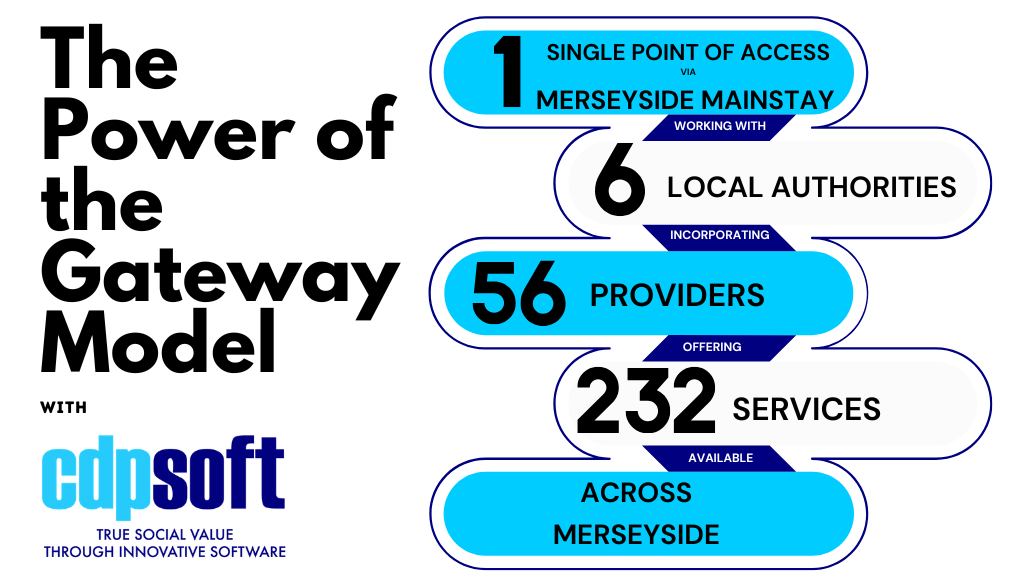
For more than a decade, CDPSoft technology has supported the MainStay Gateway model across the Liverpool City Region, providing infrastructure through which multiple local authorities and service providers can coordinate homelessness services.
It demonstrates the value of looking beyond individual applications or services and considering the infrastructure required to support an entire pathway.
Supported housing is part of the picture
There is also an important connection between the Rough Sleeping Programme and the changing supported housing landscape.
The guidance confirms that longer-term accommodation delivered through the programme can include supported housing, Housing First and Housing First-informed provision, housing-led dispersed accommodation and self-contained homes with floating support.
For authorities already considering their infrastructure in preparation for the new National Supported Housing Standards, this creates another reason to consider information and service design holistically.
Rough sleeping, supported housing, homelessness prevention and accommodation pathways may be subject to different programmes and requirements, but for the individual receiving support they are often parts of the same journey.
Creating separate information silos for each new initiative risks making joined-up working harder rather than easier.
Funding brings accountability
The published allocations are substantial, but they also come with clear expectations.
Local areas will need to confirm that they can meet programme requirements and submit delivery plans to the Ministry of Housing, Communities and Local Government. These will include the proposed scale of delivery, delivery routes and the support model being put in place.
Monitoring will initially take place every two months, using existing management information including the Rough Sleeping Data Framework, with further information on reporting expected in September 2026.
Funding for 2026/27 will be ringfenced, and unspent funding or funding not used for the agreed requirements may be subject to clawback.
That makes the ability to understand activity, performance and outcomes increasingly important.
Mobilisation starts now
The guidance asks local areas to begin mobilisation as soon as allocations are confirmed, including engagement with delivery partners, accommodation providers and support services.
For local authorities and Mayoral Strategic Authorities, this creates an opportunity to think beyond the immediate question of how the new funding will be spent.
It is also worth asking:
Do we have the infrastructure to make the different parts of our local homelessness system work together effectively?
At CDPSoft, this is an area in which we have worked for more than 30 years. Our technology supports local authorities, charities and service providers to manage homelessness and housing-related support, coordinate referrals and pathways, manage multi-provider services, record outcomes and turn operational information into meaningful intelligence.
The new Rough Sleeping Programme provides welcome investment in accommodation and support.
The opportunity now is to ensure that the systems surrounding that investment enable organisations to work together, understand what is happening across the pathway and, most importantly, provide continuity of support around the individual.
Further information
The Government documents published on 19 August 2026 can be accessed here:
Rough Sleeping Programme overview and documents:
View the Rough Sleeping Programme on GOV.UK
Full Rough Sleeping Programme Guidance:
Read the Rough Sleeping Programme Guidance
Funding allocations for Mayoral Strategic Authorities and local authorities:
View the published funding allocation spreadsheet