
Published: 17 November 2026
Key New rules introduced on 5 November 2026 give local authorities in England greater scope to bring long-term empty properties back into use. But making the most of these powers requires more than identifying vacant homes. It requires effective case management, clear processes and reliable reporting.
With housing supply under pressure and demand for temporary accommodation continuing to place significant demands on local authorities, bringing existing empty properties back into use remains an important part of the wider housing response.
The latest changes to Empty Dwelling Management Orders (EDMOs) provide councils with an opportunity to intervene earlier, while simplifying some of the requirements involved in making an application.
For local authorities reviewing their empty homes strategies, the question is now how effectively their existing processes can support these changes.
What has changed?
On 5 November 2026, the Housing (Empty Dwelling Management Orders) (Prescribed Period of Time and Prescribed Requirements) (England) (Amendment) Order 2026 came into force.
The legislation introduces two significant changes.
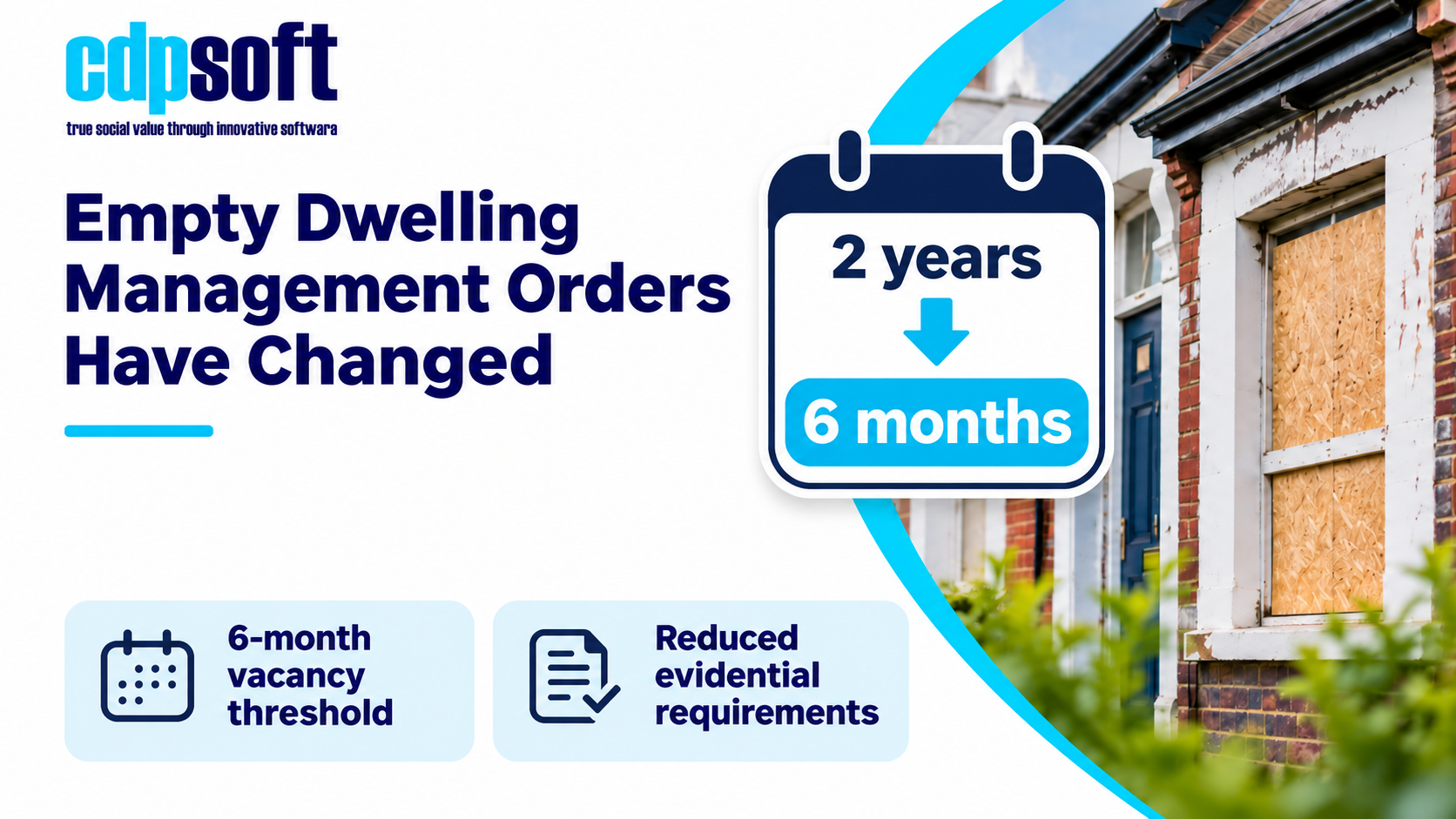
1. The qualifying vacancy period has been reduced from two years to six months.
Previously, a property generally needed to have remained unoccupied for at least two years before an EDMO could be considered.
Under the revised rules, councils can consider qualifying properties that have been empty for six months.
This creates an opportunity to identify and progress potential cases considerably earlier.
2. Certain evidential requirements have been removed.
The Government has simplified the application process by removing requirements relating to matters such as demonstrating anti-social behaviour or community support for intervention.
This does not mean an EDMO can be issued automatically after six months. Local authorities must still follow the applicable legal processes and meet the relevant statutory requirements.
However, the changes remove some of the previous barriers to pursuing appropriate intervention.
The Government’s announcement of the reforms describes the intention to help councils make more effective use of existing housing stock.
Why these changes matter for local authorities
Reducing the eligibility period from two years to six months changes when a property can potentially enter the EDMO process.
For housing and empty homes teams, this places greater emphasis on maintaining accurate property records and reviewing cases at the appropriate point.
A council may already hold information about an empty property through council tax records, neighbourhood teams, complaints, inspections or direct engagement with owners.
The challenge is connecting that information to a consistent process.
Officers need to understand when a property became vacant, what action has already been taken, whether the owner has been contacted and which intervention options have been considered.
Where an EDMO is appropriate, there must also be a clear record of the evidence, application stages, decisions and subsequent management arrangements.
These are established operational requirements, but the shorter vacancy period makes timely case identification and progression increasingly important.
Greater Manchester: Turning empty homes into housing opportunities
The importance of coordinated empty homes activity is reflected in Greater Manchester’s approach.
In November 2025, the Greater Manchester Combined Authority announced an £11.7 million programme intended to bring empty properties back into use and reduce pressure on temporary accommodation.
The plans included funding for specialist Empty Homes Officers across the city region and a £10.6 million lease and repair programme intended to support the return of at least 400 properties to use.
The approach combines engagement with property owners, financial incentives, repairs and leasing arrangements to increase the availability of temporary or settled accommodation.
Read Greater Manchester Combined Authority’s announcement.
The Greater Manchester programme is distinct from the national EDMO reforms. Nevertheless, it demonstrates the wider role that empty homes activity can play in local housing strategies.
It also illustrates the importance of coordinating multiple interventions and monitoring progress across different authorities, services and property portfolios.
From identifying empty properties to managing outcomes
As the opportunities for intervention develop, councils need visibility across the entire empty homes process.
This may include:
- Recording vacant properties and tracking how long they have remained empty.
- Managing owner contact, engagement and correspondence.
- Scheduling inspections, reviews and follow-up actions.
- Recording property conditions and supporting documents.
- Tracking the assessment and progression of potential EDMO cases.
- Managing alternative interventions, including voluntary leasing or repair arrangements.
- Monitoring properties returned to occupation and reporting on outcomes.
The objective is not simply to create more records. It is to give officers and managers an accurate, accessible picture of each case and the progress being made.
For authorities managing significant numbers of empty properties, consistent workflows can help identify cases requiring attention, improve internal coordination and provide better information for service planning.
How CDPSoft can support empty homes management
CDPSoft provides configurable case-management software designed to support local authority housing and related services.
Its approach to Empty Homes and Housing Procurement enables organisations to structure their processes around their own operational requirements.
This can include configuring case records, workflow stages, activities, milestones, document management and reporting to support the different stages of empty homes work.
For example, an authority could configure a workflow to record the date a property became vacant, manage owner correspondence, schedule reviews, record decisions and monitor progress towards reoccupation.
Where statutory processes are involved, the system can support the recording and management of relevant activities and information, with the authority retaining responsibility for its legal assessments and decisions.
Importantly, CDPSoft’s wider housing and support experience means empty homes activity can also be considered in the context of housing procurement, temporary accommodation and homelessness services.
This creates opportunities for a more connected view of available properties, case activity and housing outcomes.
The aim is to help councils make better use of the information they already hold, reduce fragmented administration and provide clearer visibility of their work.
A timely opportunity to review existing processes
The November 2026 EDMO reforms are an opportunity for local authorities to review how they identify, assess and progress empty homes cases.
With qualifying properties potentially coming into consideration much earlier, services may wish to examine whether their existing processes provide the information and oversight officers need.
Some councils may already have established empty homes systems that can be adapted to the revised requirements.
Others may benefit from reviewing how property records, case management, enforcement processes and wider housing activity are connected.
The important consideration is ensuring that operational processes support timely, consistent and well-evidenced decisions.
CDPSoft can work with local authorities to explore how configurable case management can support their empty homes and housing procurement processes.
To discuss your existing arrangements or explore potential improvements, contact Keirron Goffe at keirron.goffe@cdpsoft.com.
For further information about managing empty homes activity, read CDPSoft’s earlier article: Empty Homes and Housing Procurement.